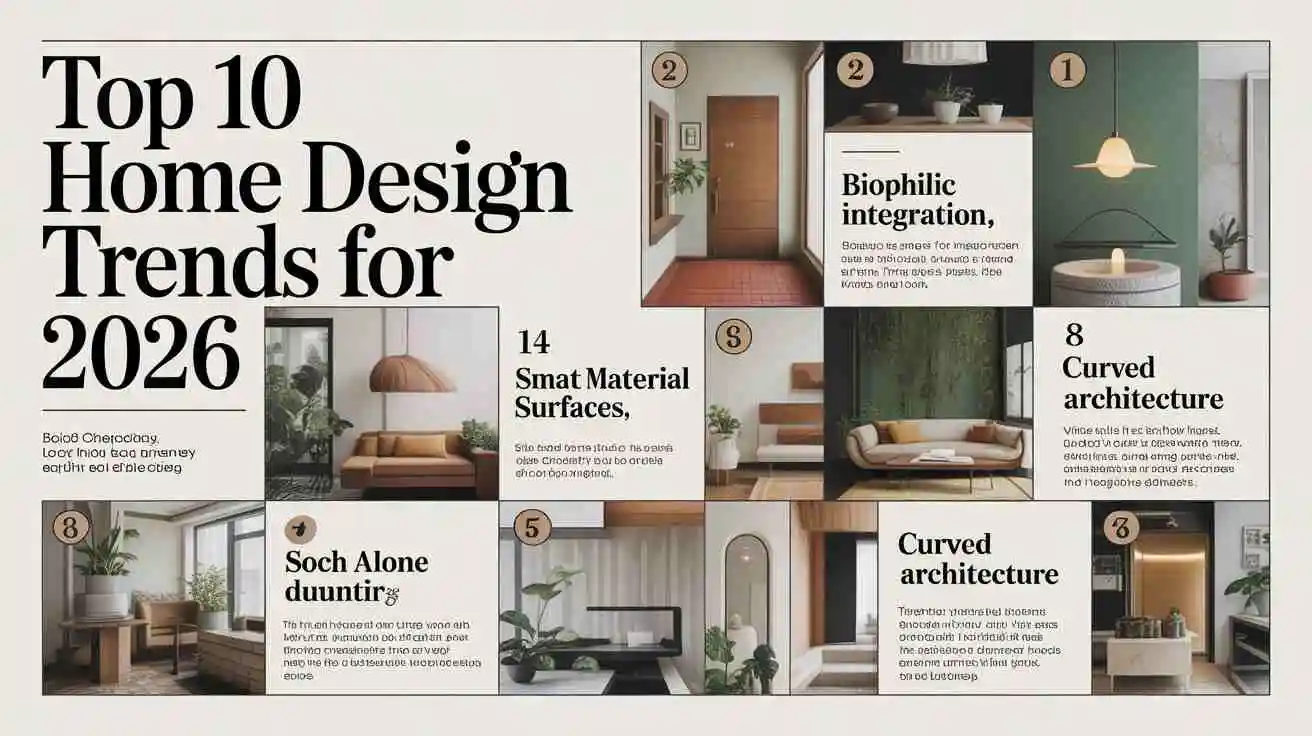
INTRODUCTION
Our home design choices now display a greater purpose than at any time before. Interior design in 2025 will expand its boundaries because it transforms into a personal expression that reflects the values and lifestyle of people who want to experience their home. The essential design trends which shape contemporary home design establish a foundation for your selection process which leads to timeless design choices that remain relevant in today’s world. The guide presents 15 home design trends which will have their most significant impact in 2025 and provide practical solutions for readers to implement these trends in their home environments.
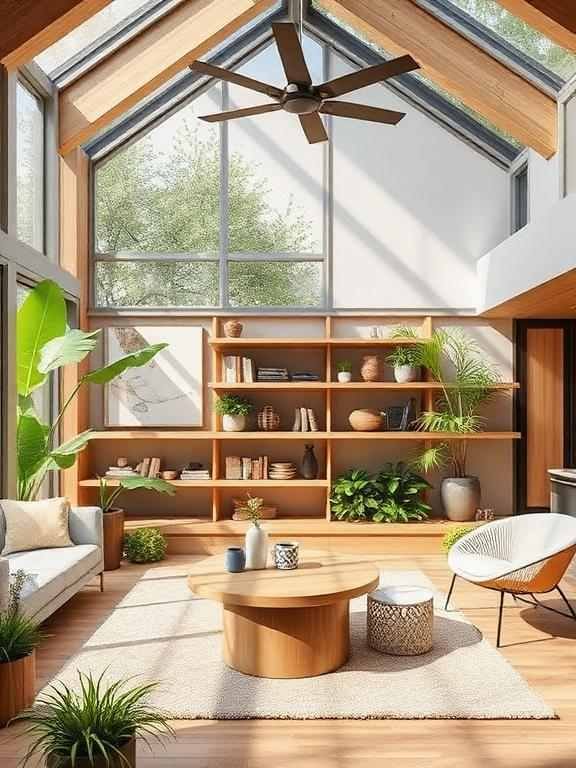
1. Sustainability as a Core Principle in Home Design
Home design in 2026 requires sustainability to function as its essential design principle. Sustainable homes are now essential because climate change worsens while people develop greater environmental awareness.
Eco-Friendly Materials and Construction
The current design trend shows designers increasingly prefer eco-friendly materials for their projects. The construction industry is seeing growing demand for reclaimed wood, bamboo, cork, and recycled metals. The materials create aesthetic value for homes because they reduce waste to create unique design elements. Mycelium-based insulation and bioplastics serve as environmentally friendly alternatives to conventional building materials.
The construction industry uses passive solar design as a green construction method because it harnesses solar energy to provide building heating and cooling while minimizing equipment needs. The use of low-VOC paints and finishes results in improved indoor air quality, which benefits the creation of healthier indoor spaces.
Energy Efficiency and Renewable Energy Integration
The first priority for 2026 homes centers on achieving energy efficiency. Solar panels have transformed from luxury items into essential components of modern construction projects and existing building renovations. Homeowners can maintain independent power supply through extended periods of time when solar energy storage systems work together with battery storage solutions.
Geothermal heating and cooling systems deliver energy-efficient climate control, while smart thermostats learn household patterns to achieve optimal energy management. The combination of LED lighting, energy-efficient windows, and advanced insulation technologies produces decreased energy requirements.
Water Conservation Technologies
The establishment of water conservation systems has become standard through the widespread adoption of low-flow faucets and dual-flush toilets and smart irrigation systems. Homeowners can create a rainwater harvesting system to collect rainwater which they can use to water their landscapes.
2. The Return of Warm Mahogany and Earthen Tones
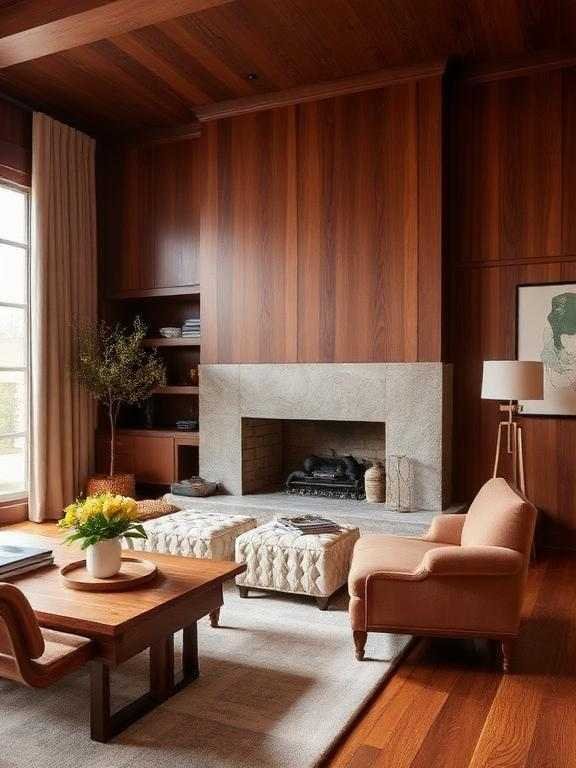
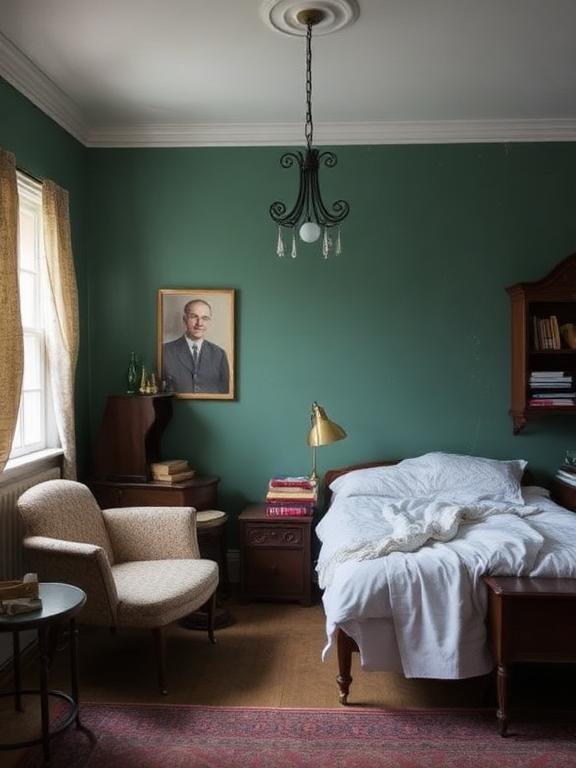
The design world experienced a domination battle between “Cool Grey” and “Stark White” during the last ten years. The colors will become permanently obsolete starting in the year 2026. The current year showcases different types of warm and deep colors. Wood tones create a strong resurgence in cabinetry and flooring through their deep rich mahogany and walnut and cherry wood tones. The earthen tones that accompany these woods include Burnt Sienna and Ochre and Transformative Teal which serves as the “Color of the Year.” Designers apply “Color Drenching” which involves painting every part of a room with one deep earth tone that includes the ceiling and trim and doors. The design creates a “cocoon effect” which causes large spaces to feel cozy while small spaces simulate expensive jewelry-box environments.
3. Tactile Materiality and “The End of Smooth”
The year 2026 defines any surface that achieves perfect smoothness as an incomplete surface. The year 2023 establishes “Tactile Materiality” as the ultimate design principle. Our eyes suffer from fatigue because we continuously look at glass smartphone screens which force us to seek tactile experiences in our surroundings. The current trend shows an increase in using lime-wash and Roman clay wall finishes which display the brush strokes created by the artisan. The kitchen industry now uses “leathered” stone and “honed” granite as substitutes for high-gloss marble. The surfaces possess a natural texture which creates an exceptional tactile experience. The fabric industry has developed more intense texture because designers now combine raw silks with heavy linens and chunky wool weaves to fashion sensory experiences which shift according to natural light throughout the day.
4. Modern Medieval and Heritage Revival
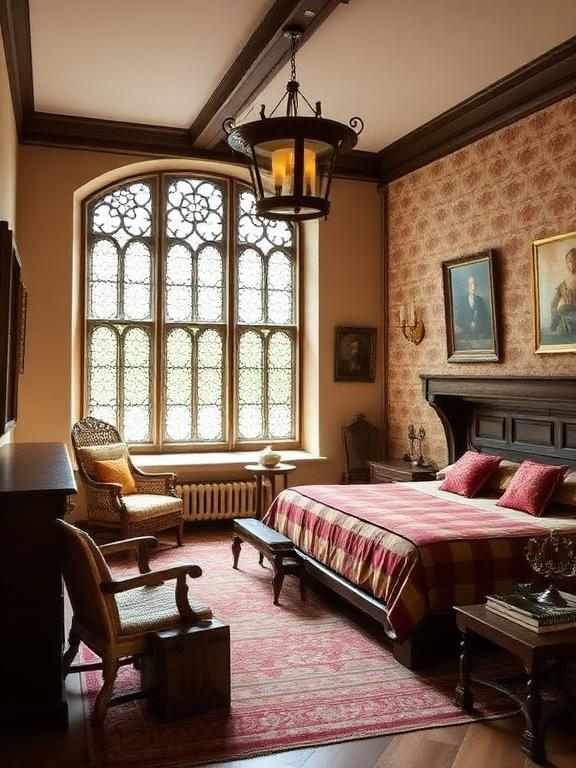
The world needs stability because people desire permanent existence on earth in 2026. People who live in modern digital environments want their homes to preserve historical elements. The modern world has created the “Modern Medieval” design movement. The design includes European estate elements through its use of heavy timber beams and wrought iron chandeliers and arched doorways and modern minimalist furniture and advanced lighting systems. Designers of this trend study the artistic mistakes that artists make when creating their work. The market values hand-forged metalwork and hand-clipped tile and rough stone flooring as its most precious items. The movement opposes the current trend of creating identical furniture products through the use of standardized production methods. The new definition of luxury in 2026 describes an object that appears to have existed for a century and will remain intact for another hundred years.
6. Sculptural “Fat” Furniture and Curvilinear Comfort
The period of your data training extends until October of the year 2023. The year 2026 has brought forth furniture that designers now consider to be both “Sculptural” and “Fat” The current design trend appears through its furniture pieces which feature massive circular forms that include sofas with wide cylindrical arms and pebble-shaped coffee tables and chairs that resemble sculpted stone blocks. The shapes serve a dual purpose as they function as visual elements and enhance “Conversational Flow” in space. People now prefer to use “C-shaped” or “S-shaped” seating designs which create spaces that naturally lead people to face each other. The aesthetic provides a soft appearance which invites people to touch it while delivering deep comfort that enables residents to unwind after their challenging day.
7. The “Hidden Luxury” of the Scullery and Back Kitchen
The “Hidden Luxury” of the Scullery and Back Kitchen The “Open Plan” kitchen is undergoing a major renovation in 2026. The present kitchen design trend combines beautiful kitchen islands with cooking areas that people want to keep hidden from view. The solution to this problem creates two separate spaces: The “Back Kitchen” and “Scullery” The main kitchen has become a “Show Kitchen”—a clean, beautiful space for entertaining and light prep. The Scullery area contains its main appliances through an entryway which people can access through either a hidden door or a “pocket door” The home maintains its peaceful atmosphere which resembles an art gallery during dinner parties. The 2026 luxury design trend reaches its highest point through the concept of having two distinct kitchen spaces: one for aesthetic purposes and another for practical kitchen tasks.
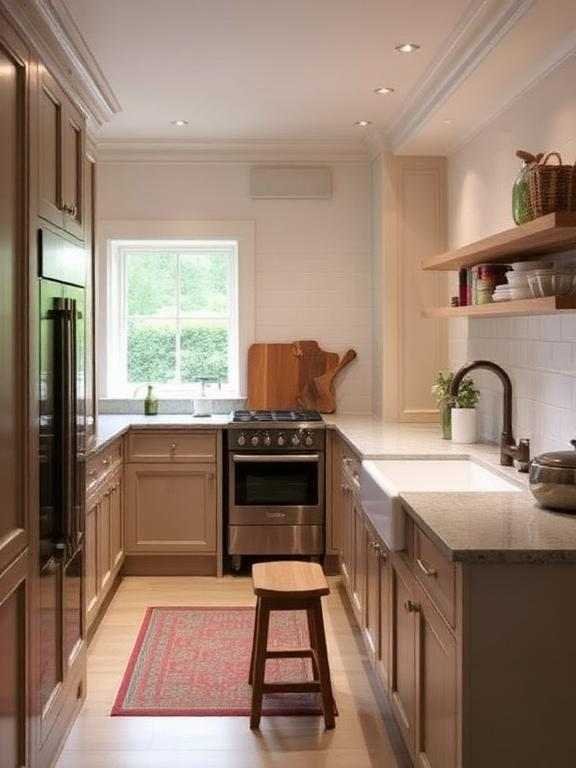
8. Bio-Materials and Mycelium Decor
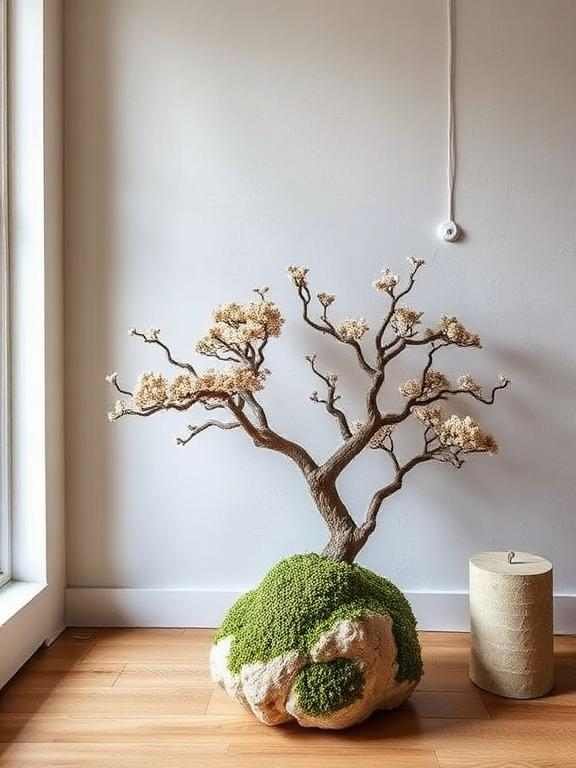
9. The Rise of “Quiet Technology” and Invisible Integration
The public has lost interest in “smart gadgets” which became popular until 2026 now. The public prefers Quiet Technology which they find more useful than maintaining their current screen technology. The current state of technology has made all devices and systems vanish from view. The advanced audio systems of 2026 high-end residences use speakers which architectural elements to create passive sound transmission through walls. Modern televisions have transformed from their original design as black wall-mounted rectangles to operate either as museum-quality art pieces or transparent displays when not in use. The technology now enables wireless charging through direct installation into kitchen countertops and bedside tables which uses specific charging locations on marble surfaces for device charging. The system operates according to the “Calm Tech” doctrine. The home should function as a protective space which separates residents from digital connections but maintains complete access to online content. The system exists to assist residents through its unobtrusive operation which requires no visual contact and will not disrupt the room’s visual design.
10. Multi-Sensory Entryways and the “Decompression Zone”
The entryway has been redefined in 2026. Architects are moving away from the “front door opens directly into the living room” layout. The Foyer area has returned to its formal setup which now operates as a “Decompression Zone.” This space provides a pathway which helps people move from their active street activities into the calm atmosphere of their home. The zones of 2026 provide multiple sensory experiences to visitors. The rooms use integrated aromatherapy systems which produce particular scents together with distinct flooring materials that include smooth river rocks and soft cork and dimmer lighting systems for the entire space. Homeowners create a dedicated Smart Mudroom space which contains UV-C light closets that automatically.
11. Modern Maximalism and “The Collected Gallery”
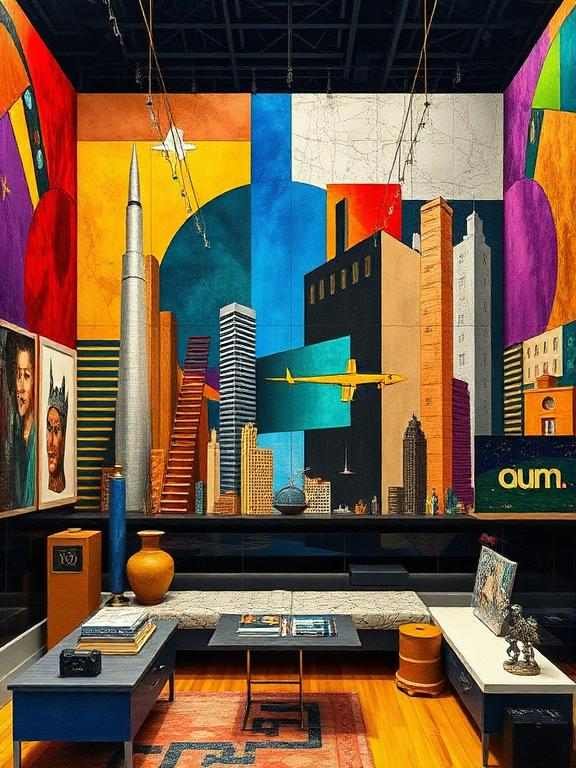
12. Wellness Sanctuaries: The “Spa-Bath” Evolution
The bathroom in 2026 functions as a private health club instead of its previous role as a utility space. The “Wellness Sanctuary” trend has seen the integration of high-end recovery technology into the home. Cold plunge tubs and infrared saunas have become common features in master suites because people now use them outside their original purpose as professional athlete equipment and luxury gym facilities. Digital Water Management systems enable users to preset shower parameters by voice command while mirrors function as health monitors that assess skin hydration and sleep patterns during tooth brushing. The materials used in these spaces have also shifted; instead of cold white porcelain, designers are using warm travertine, teak wood, and volcanic rock to create a “Grotto” feel. The shower area has transformed into a meditation space which uses “Rainfall” heads to create a complete sensory experience through natural soundscapes.
13. Functional Zoning and the “Room-Within-a-Room”
Permanent hybrid work adoption has forced the 2026 home to develop solutions that address “the home office” requirement. The solution is Functional Zoning. Designers implement “Soft Partitions” through heavy acoustic curtains and fluted glass sliders and rotating bookshelves to create enclosed spaces that function as separate rooms. This system creates a space that serves as an open bright living space during daytime hours and transforms into private silent office spaces and study areas when required. The ultimate luxury in 2026 centers around “Flexibility” which enables spaces to adapt according to time periods and visitor numbers. This trend also includes “Micro-Zoning,” which includes dedicated soundproofed “Phone Booth” spaces for video calls that feature advanced audio technology.
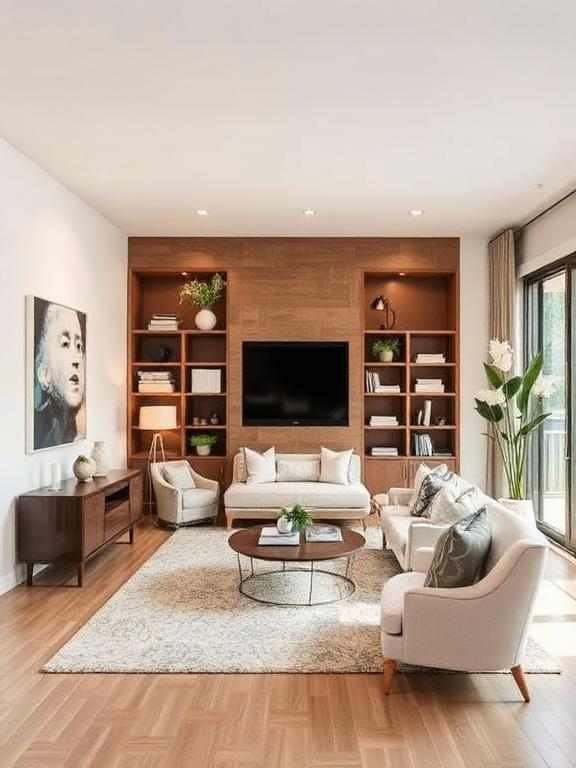
14. Monochromatic Layering and “Texture-on-Texture”
The advanced version of “Color Drenching” from 2026 introduces “Monochromatic Layering” which operates as its more sophisticated form. This artistic technique employs one color to create fifty distinct textured and colored variations. A “Sand” colored room showcases a rough plaster wall together with a smooth silk rug and a velvet sofa and a matte wooden coffee table which all display different variations of beige and cream. The visual depth created through this method produces a state of extreme tranquility. The human eye can examine the material qualities and light interactions between different surfaces because competing colors do not exist to hinder its view. The design achieves sophisticated results which provide an “expensive” appearance that avoids “flashy” elements. The process of controlling texture elements requires advanced expertise because designers must create three-dimensional effects which enable users to experience maximum tranquility during their 2026 space design.
15. The “Patina” Movement: Embracing the Aged
The “Patina Movement” represents the last significant trend of 2026. Homeowners experienced a desire for their houses to remain in pristine condition throughout their entire lifespan. Homeowners in 2026 want their residential spaces to develop dignity as they get older. This approach requires selecting materials which will enhance their value throughout the years. The market shows an enormous increase in “Unlacquered Brass” hardware which develops tarnish and changes its appearance through human contact. The market currently offers “Natural Oak” flooring products which will develop marks from use by households and create a visual record of their domestic activities. People now accept “Porosity” as a kitchen design element. People prefer stones which will create a “patina of use” through natural absorption of oils and spills instead of selecting stone countertops which become sealed to imitate plastic. The current fashion trend follows the “Wabi-Sabi” philosophy which finds aesthetic value in things that show flaws through their natural aging process. The design creates a home environment which maintains a permanent presence while exhibiting genuine character throughout its existence.
Conclusion: The Future of Living
The home of 2026 stands as an architectural achievement which establishes equilibrium between its various elements through 15 essential design trends. The space combines advanced technology with human biological requirements while it combines “Modern Medieval” architectural design with “Bio-Material” scientific progress and all of its surfaces create solutions to our digital stress. Humanity serves as the shared factor among all people. We no longer create products which cater to typical users who want common visual designs. We create designs which reflect our personal identities. The library uses “Color Drenching” to create an earthen-red experience while the kitchen employs “Invisible Tech” to achieve the same objective, which includes creating a space that unites with us while supporting our recovery process and showing our personal life story. The 2026 home serves as an architectural space which enhances our health through its presence. The combination of texture warmth and biological elements with heritage components creates spaces which enhance our well-being while improving their visual appearance. The 2026 golden rule states that your home should contain items which provide you with a sense of stability.